Meet Currency Pairs
Imagine walking into an ice cream shop but instead of choosing flavors, you choose currencies.
Instead of “One scoop of vanilla please,” it’s more like “I’ll take some euros in exchange for dollars.”
Welcome to currency pairs — the heart and soul of the Forex market.
A currency pair simply shows:
One currency vs another.
You’re always comparing them as a pair, like a dance duo where one leads and the other follows.
This pair format is what allows traders to measure relative strength between economies and decide whether one currency is likely to rise or fall against another.
How Currency Pairs Work
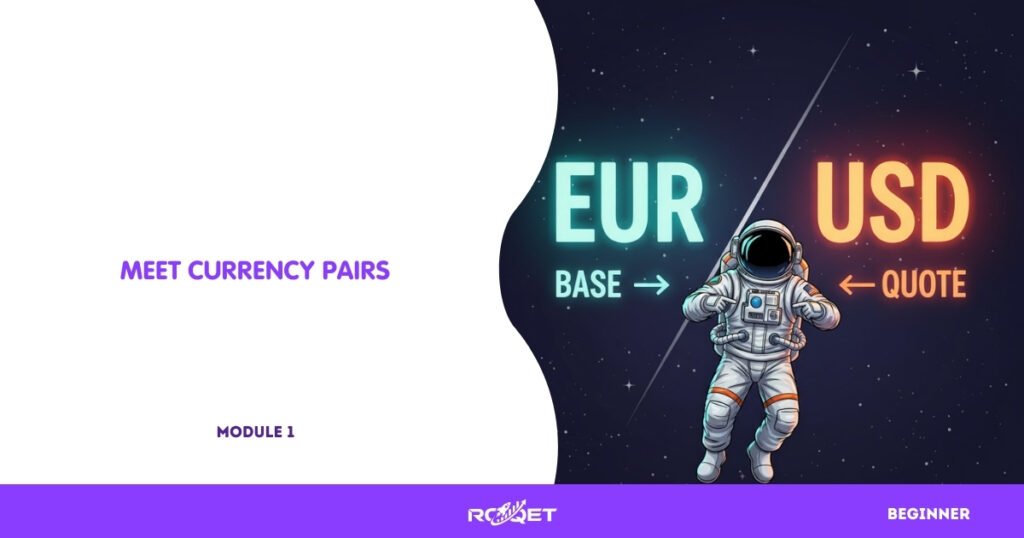
Currency pairs always follow this structure:
BASE / QUOTE
- Base currency = the first currency in the pair
- Quote currency = the second currency in the pair
Example:
EUR/USD
- EUR = base
- USD = quote
This tells you:
“How many U.S. dollars (quote) does one euro (base) cost?”
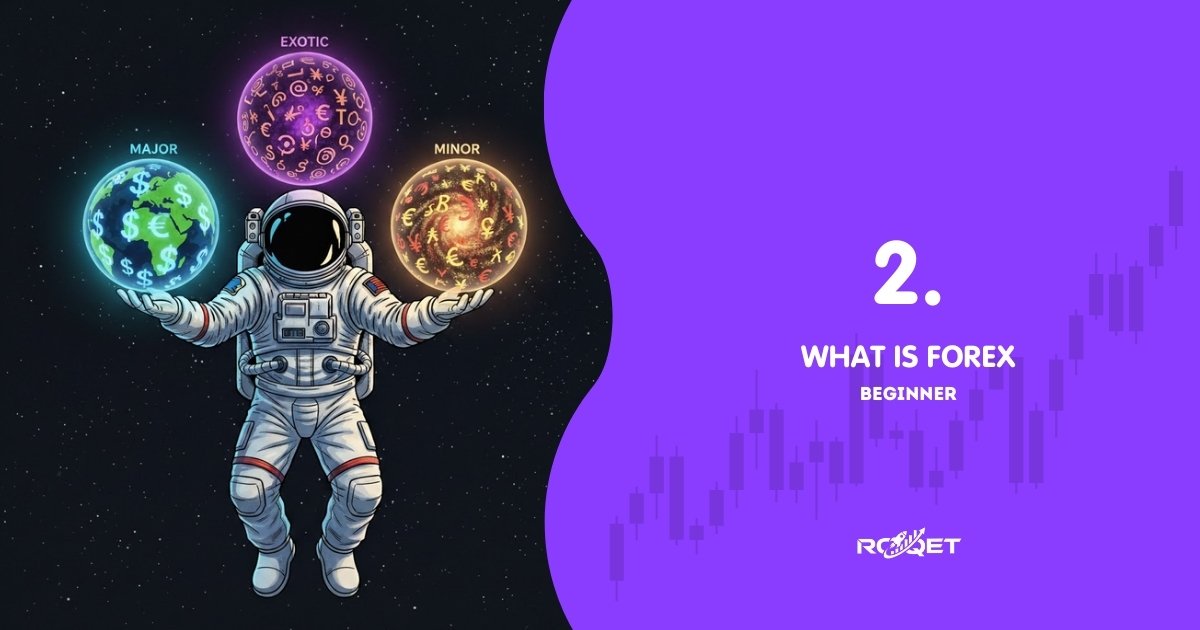
Majors, Minors, and Exotics
Currency pairs aren’t all equally popular. Just like movies, some are blockbuster hits, some are indie films, and some… well, only a few fans are watching.
Major Pairs
Always include the USD.
These are the most traded pairs in the world and tend to be the most liquid.
Examples:
- EUR/USD
- GBP/USD
- USD/JPY
- USD/CHF
- USD/CAD
- AUD/USD
- NZD/USD
Why are they “major”?
Because the U.S. dollar is the world’s most influential currency — used in global trade, energy pricing, and international settlements.
Minor Pairs (Crosses)
Pairs without the U.S. dollar.
They’re still important but often move differently due to regional economics.
Examples:
- EUR/GBP
- EUR/JPY
- GBP/JPY
- AUD/NZD
These pairs are called cross pairs because they “cross” two non-USD currencies together.
Exotic Pairs
These mix a major currency with an emerging or developing-country currency.
Examples:
- USD/TRY (U.S. dollar / Turkish lira)
- EUR/ZAR (euro / South African rand)
- USD/MXN (U.S. dollar / Mexican peso)
They tend to move differently because their economies can be more volatile, political events have larger effects, and liquidity is typically lower.

Why This Matters in Real Trading
Understanding currency pairs helps you avoid beginner confusion and lets you choose instruments appropriate for your style and risk appetite.
What You Gain by Knowing This
- Clear understanding of what you’re actually trading.
You’re trading one currency’s strength vs another’s. - Better awareness of market behavior.
Majors move differently than exotics — and for good reason. - Smarter pair selection.
Some pairs trend smoothly, some are choppy, some are volatile. - Fewer beginner mistakes.
No more mixing up which side is the base and which is the quote.
Common Beginner Mistakes
- Thinking currency pairs are random combinations instead of economic relationships
- Assuming all pairs behave the same
- Not realizing USD dominates many global transactions
- Confusing base vs quote and misreading the market direction
💡 Tip: Always read pairs left-to-right. The base (first) is what you’re “buying” when you go long.
🤓 Did You Know?: Over 80% of all Forex transactions involve the U.S. dollar in some way.
Key Takeaways
- Every Forex instrument is a pair: base currency vs quote currency.
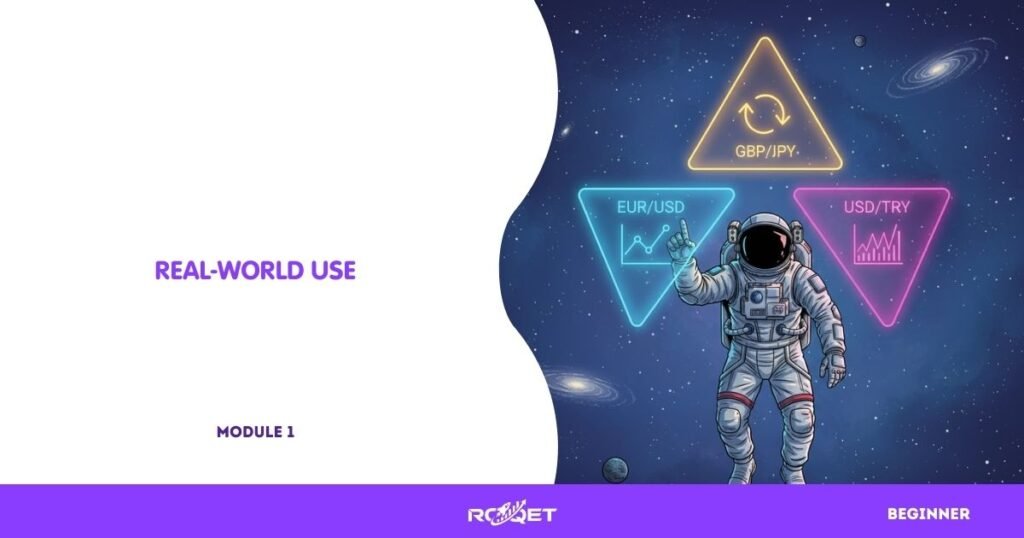
- There are three main categories: majors, minors/crosses, and exotics.
- Majors include USD and tend to be the most liquid.
- Minors exclude USD and behave differently due to regional influences.
- Exotics mix a strong currency with an emerging one and often move more sharply.
Leave a Reply