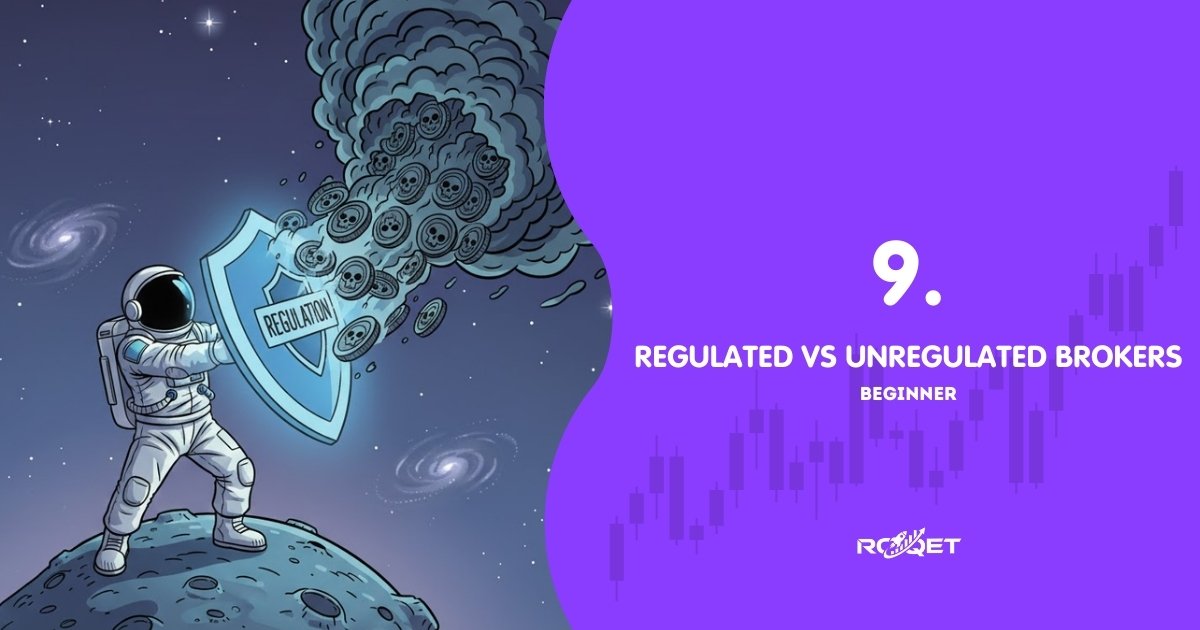
Imagine you’re getting ready for an epic space journey to trade intergalactic currencies. You have two spaceships available: one that was built by a respected manufacturer, passed rigorous safety checks, and is insured against black holes. The other ship? It looks cool, but it was assembled in someone’s backyard and comes with a verbal “trust me” guarantee.
Which spaceship are you stepping into?
In the world of Forex, your broker is your spaceship. It carries your trading capital and executes your crucial missions. Choosing between a regulated broker and an unregulated broker is the single most important safety decision you will make. This lesson will define what regulation means, why it’s critical to your success, and why you should steer clear of those backyard-built ships!
What Is Broker Regulation and Why Does it Matter?
Regulation, at its core, is a set of rules and standards designed to protect you, the trader, and maintain the integrity of the market. Think of financial regulators as the galactic traffic cops and auditors. They don’t want you to get lost or ripped off!
Definition of Regulation
Broker regulation means that a governmental or independent financial authority has granted a broker a license to operate. To get and keep that license, the broker must adhere to strict rules about how they handle client money, their operational transparency, and their overall business conduct.
Key Regulator Roles
These regulatory bodies—like the FCA in the UK, the ASIC in Australia, or the NFA in the US—serve several key regulator roles:
- Licensing: They review and approve brokers who meet capital and compliance requirements.
- Auditing: They regularly check the broker’s books and practices to ensure fairness.
- Enforcement: They have the power to fine, suspend, or revoke licenses if a broker misbehaves.
Oversight Mechanisms
The rules enforced by these regulators are known as oversight mechanisms. They dictate things like minimum operating capital (ensuring the broker isn’t broke) and internal compliance standards (ensuring the broker follows the law). The most important mechanism for you is usually Client Fund Protection.
Client Fund Protection
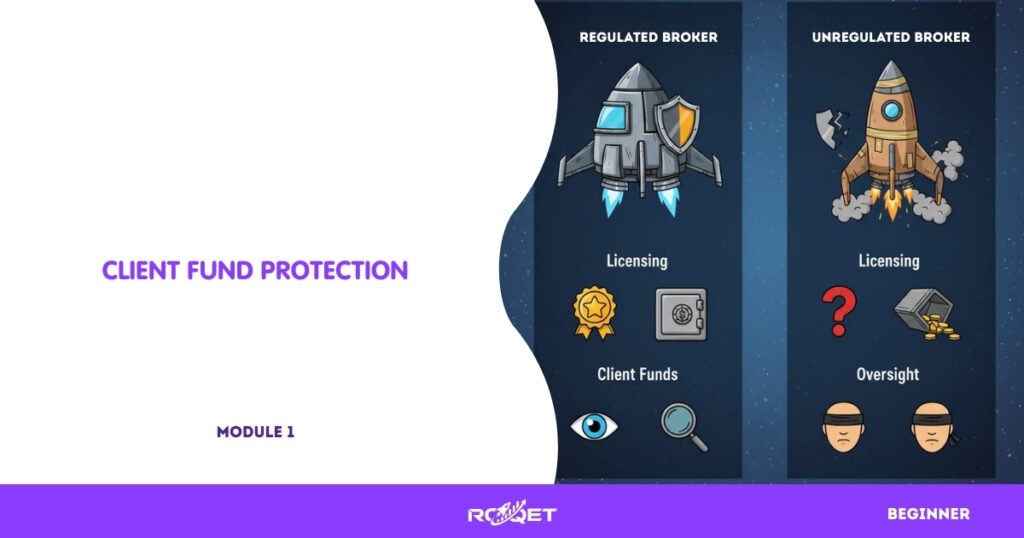
A cornerstone of good regulation is the requirement for Client Fund Protection. This means regulated brokers must keep your money in segregated bank accounts—physically separate from the company’s own operating funds. If the broker goes bust, your money is protected and cannot be used to pay the company’s debts. This is a massive safety net!
The Dangers of Offshore Brokers (The Unregulated Side)
When a broker operates without a license from a major, reputable financial center, they are often referred to as an “offshore broker.” While not all offshore brokers are bad, the lack of enforceable regulation exposes you to significant dangers of offshore brokers.
Without a proper watchdog, the broker can essentially write their own rules.
| Feature | Regulated Broker | Unregulated Broker (Offshore) |
| Client Fund Protection | Segregated Accounts (Your money is safe, separate from company funds) | Commingled Funds (Your money is mixed with company funds, risky) |
| Dispute Resolution | Formal regulatory or financial ombudsman system is available | You must rely on the broker’s own, non-binding internal process |
| Capital Requirements | Must hold large operating capital to ensure solvency | Can operate on a shoestring budget, increasing bankruptcy risk |
| Transparency | Regularly audited, published reports, clear terms of service | Opaque operations, hidden fees, vague contract terms |
| Leverage Limits | Often capped (e.g., 1:30) for your protection | Ultra-high leverage (e.g., 1:1000) that can wipe you out quickly |
The “Wild West” Scenario
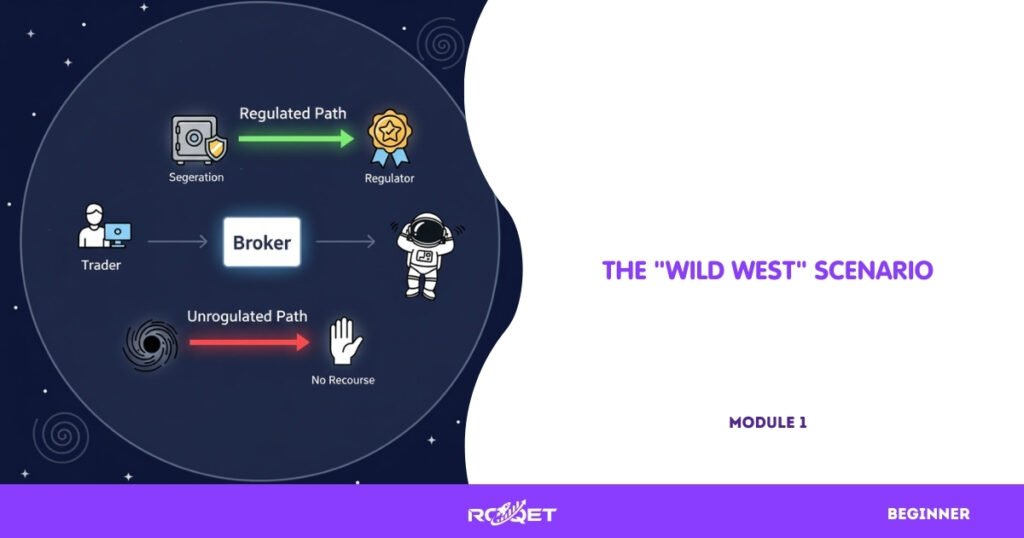
When you trade with an unregulated entity, you are essentially in the “Wild West.” If there is a dispute—say, they refuse to let you withdraw your profits, or they claim a system glitch cancelled your winning trade—you have very little recourse. You can’t call the “galactic cops” because the broker is operating outside their jurisdiction.
📌 Note: The main appeal of offshore brokers (unregulated) is often the promise of extremely high leverage or huge bonuses. While tempting, remember that these “perks” often come at the expense of safety and fund security.
Key Takeaways
Regulated vs. unregulated is the fundamental difference between safe trading and high risk speculation on your capital’s integrity.
- Regulation is Protection: Regulation means your broker is held accountable by a governmental body, ensuring fair play and transparency.
- Segregation is King: Always choose a broker that segregates client funds in separate bank accounts to protect your capital from the broker’s operational risks.
- Oversight Provides Safety: Regulatory oversight mechanisms enforce minimum capital requirements and conduct standards, reducing the chances of the broker failing or committing fraud.
- Avoid the Wild West: Unregulated (offshore) brokers present significant risks, as you have almost no legal recourse if a dispute arises or they decide to close shop with your money.
Leave a Reply