Ever tried joining a gym where the instructor doesn’t even check who you are?
Yeah… you probably wouldn’t want to lift weights next to a mysterious hooded figure with a fake name tag that says “Definitely Not A Criminal.”
That’s exactly why brokers use KYC (Know Your Customer) and AML (Anti-Money Laundering) procedures.
They make sure every trader is a real person, using real documents, for real legal purposes — not a shadowy villain trying to hide funds in a trading platform.
Let’s break down what these terms mean and why they matter.
Comic Illustration Idea (Visual #1 — KYC Steps)
A comic-style astronaut standing at a futuristic “identity checkpoint,” holding documents while a friendly robot scans them. Glowing symbols float around representing ID, address proof, and selfie verification. Space backdrop, single scene, no text.
How KYC / AML Works
1. What KYC Is
KYC = Know Your Customer.
It’s the process where brokers confirm your identity using:
- A government-issued ID
- Proof of address
- Sometimes a selfie or live verification
It ensures that you’re exactly who you say you are.
2. What AML Is
AML = Anti-Money Laundering.
These are rules designed to:
- Prevent criminals from hiding illegal money
- Detect suspicious transactions
- Ensure trading platforms aren’t misused for fraud
3. Required Documents
Most brokers will ask for:
- Passport / ID card / Driver’s license
- Utility bill or bank statement dated within 3 months
- Selfie/liveness check on some platforms
4. Why Verification Prevents Fraud
By verifying identity and address:
- Brokers stop impersonation
- Prevent stolen identities being used
- Block attempts to launder funds
- Keep the trading environment safe for real traders
5. Compliance Timeline
Typically:
- Upload documents
- Broker reviews them (minutes → 48 hours)
- Account becomes fully verified
- Deposits and withdrawals unlock
Comic Illustration Idea (Visual #2 — AML Flow)
A comic-style scene showing an astronaut escorting “money packets” through a clean, glowing security tunnel while scanners check for suspicious activity. No text, space station theme.
Why This Matters in Real Trading
If you want to withdraw money, trade legally, and stay protected, KYC/AML compliance isn’t optional — it’s the foundation of safe trading.
Benefits
- You avoid blocked withdrawals
- Your account can’t be easily impersonated
- Broker platforms stay safe for everyone
- You become eligible for full platform access
Common Mistakes
- Uploading blurry documents
- Using mismatched address information
- Submitting expired ID
- Ignoring verification until it’s withdrawal time
💡 Tip: Always complete KYC immediately after opening an account — doing it later often causes delays.
📌 Note: Document details must match EXACTLY across all submitted files.
🤓 Did You Know? Many brokers now use AI verification that approves documents in under 10 minutes.
Key Takeaways
- KYC confirms your identity; AML prevents illegal activity.
- You’ll typically need an ID, proof of address, and sometimes a selfie.
- Verification protects both traders and brokers from fraud.
- Approval can be fast — from minutes to a couple of days.
- Proper compliance ensures smooth deposits and withdrawals.
Thumbnail Idea
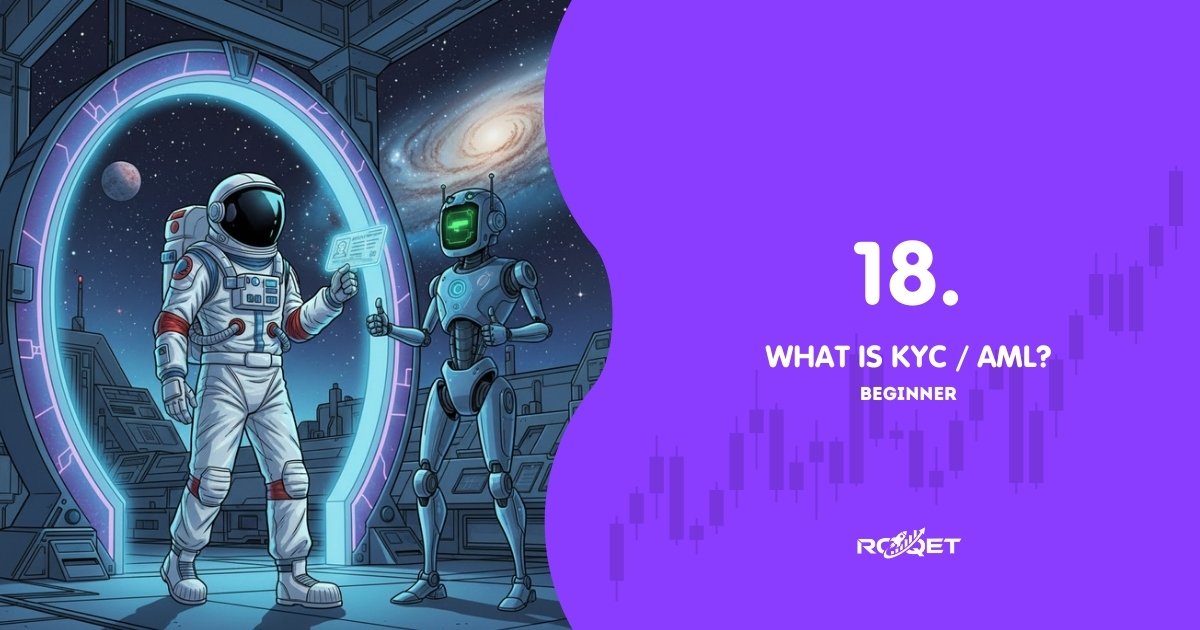
An astronaut holding an ID card while passing through a glowing security archway in a space station, with a verification robot giving a thumbs-up. Space backdrop, single scene, no text.
Leave a Reply